
Getting Washington County Court Records
The Clerk of Court at Washington Combined Court holds the state District Court and County Court case files. A smart first move is the free Colorado Docket Search, which can identify the case and a useful event date. Be clear on what it gives you. It returns hearings, not documents. From there, call 970-345-2756. Or stop at the clerk counter at 26861 Highway 34 in Akron. You can also mail a request to P.O. Box 455, Akron, CO 80720. The local page publishes WashingtonClerksOffice@judicial.state.co.us for self-represented filings, though you should ask staff before treating that filing address as a record-order channel.
The court offers no Washington-specific online record-request form. Call the clerk to ask whether terminal inspection is available at the courthouse. Colorado Courts E-Filing gives limited access to an eligible party's own domestic-relations or eviction matter after registration and opt-in. But it is not anonymous public document access.
- Use the hearing search, case papers, or clerk help to identify the court and case number.
- Name the exact register, pleading, order, judgment, transcript, or other item sought.
- Choose phone, counter, mail, or an electronic route that clerk staff confirms.
- State whether inspection, a plain copy, or a certified copy is needed and request a cost quote.
- Follow the clerk's payment, identification, processing, and delivery instructions.
Washington County Court Record Keeper
Colorado runs its trial-court files through a Judicial Branch clerk office. Sandra K. Farris is the listed Washington County Clerk of Court and Probate Registrar. Her office serves both levels of the Combined Court. On the District Court side it keeps felony, major civil, domestic-relations, probate, juvenile, mental-health, and protective-proceeding files. County Court files cover misdemeanor, traffic, small-claims, eviction, protection-order, and limited civil matters.
Do not send a judgment or pleading request to the elected Washington County Clerk and Recorder. That office sits at the county administrative courthouse. It handles county functions, not the judicial case file. Akron Municipal Court separately keeps Akron ordinance and municipal traffic matters. The court named on the record controls.
Washington Combined Court Clerk
26861 Highway 34
P.O. Box 455, Akron, CO 80720
970-345-2756
WashingtonClerksOffice@judicial.state.co.us
Court Record Types
Washington County court records range from a short calendar result to a clerk-authenticated order. So ask for the product that answers your need. A request for "everything" can be slower and cost more than one tied to an entry date or document title.
- A hearing docket lists scheduled court events.
- A register of actions gives the chronological case history.
- Pleadings include complaints, petitions, motions, responses, and related filings.
- Orders and judgments record the judge's signed rulings.
- Transcripts come from the reporter or recording custodian identified by the clerk.
- Certified copies add the clerk's authentication to an available filed record.
A calendar entry may point to a record without containing it. When a date, ruling text, or final disposition must be established, ask the clerk for the register or the named filing itself.
Washington County Docket, File, or Certification
Three records get confused constantly. The hearing docket is the public schedule. The register of actions is the case's dated filing and activity index. A certified copy is an authenticated reproduction of one specific filed record. Keep the differences straight. A printed hearing row cannot replace a signed order. An ordinary copy does not become certified just because it came from an online screen.
For a Washington County court record search, start with the calendar. Capture the case number and the relevant date. Then ask the clerk for the register or the named document. If another court or agency requires official proof, say so up front. Ask about certification before you receive a quote. That sequence cuts ambiguity and keeps the request with the correct custodian. Note: A hearing printout is useful for locating a case. But it is neither the signed order nor a certified copy.
Inside a Washington County Court Record
A full case file can hold much more than the public calendar exposes. Contents vary by case type and access rule. The register usually ties together the header, parties, filings, hearings, rulings, disposition, and available financial activity. Not every item is public remotely. Exhibits can carry their own handling limits.
| Case Identity | Court, case number, class, caption, filing date, and status. |
|---|---|
| Parties and Counsel | Names and roles, subject to redaction and access policy. |
| Register of Actions | Dated entries for filings, settings, orders, and disposition. |
| Pleadings | Complaints, petitions, answers, motions, and responses that are accessible. |
| Orders and Judgments | Signed rulings and final or enforceable decisions. |
| Financial Entries | Fees, costs, restitution, or balances when part of the accessible file. |
| Exhibits | Filed evidence or attachments, subject to separate access and custody limits. |
The public version may omit or redact protected data. The clerk can tell you whether a field or document is available remotely, at the courthouse, or only with authorization.
Washington County Copy Request Checklist
The clerk offers no local request form, so a precise written request does the work. Give a phone number, email, and mailing address. Identify "Washington County District Court" or "Washington County Court." Do not name merely a county office. A case number is strongly preferred. Give it in year, class, and sequence form. Without one, provide the caption or party name and a reasonable date range.
| Request Field | What to Provide | Why It Helps |
|---|---|---|
| Court and case | Court level and full case number | Routes the search to the correct file |
| Named record | Register, pleading, order, judgment, or transcript | Avoids an overbroad request |
| Entry date | Filing or docket date if known | Distinguishes similar documents |
| Copy type | Inspection, plain, or certified | Controls production and fees |
| Delivery and cost | Preferred method and a quote-first limit | Lets the clerk confirm terms before work |
Do not mail cash unless clerk staff instruct it. Ask about accepted payment, identification, prepayment, and current retrieval time. Note: A quote-first cost limit lets the clerk clarify charges before retrieval or copy work begins.
Fees and Certified Copies
A plain copy reproduces an available record. A certified copy carries clerk authentication. The clerk publishes no Washington-specific copy and certification amounts, so get a current quote under Chief Justice Directive 06-01. Do not substitute the administrative-record rule's per-page cap for court-case copy pricing.
| Item | Published Amount or Status |
|---|---|
| Official hearing search | $0 |
| CCE search | $0 |
| CCE case history for a nonfiling user | $15 with 14-day access under September 2025 pricing |
| CCE document after authorized access | $0 |
| Plain trial-court copy | Current Combined Court quote required |
| Certified copy | Current Combined Court quote required |
| Transcript or archive reproduction | Custodian estimate required |
The Chief Justice Directive index is the source for current fee and access directives.
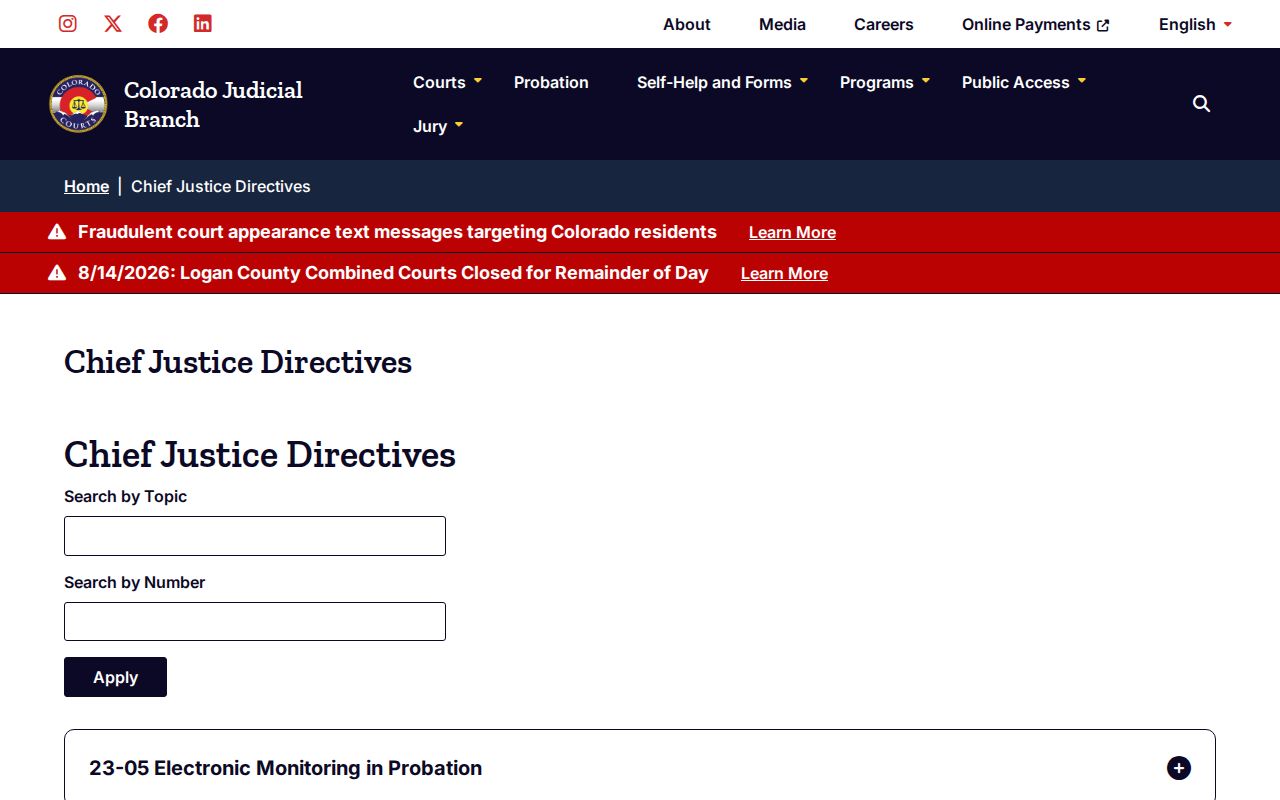
That directive list matters because the current statewide rule controls a Washington County copy quote.
Washington County CCE Record Limits
Colorado Courts E-Filing, or CCE, handles electronic filing for the courts that use it. The historical mandatory e-file list covers many courts. Washington District Court is among them. But CCE is not an open Washington County court record search. A member of the public can mainly register for access to that person's own domestic-relations or eviction case. Court approval can take up to two business days. Attorneys get broader filing functions. Even so, their access is nothing like anonymous public browsing of court records. The official CCE overview shows the program's actual case and filing role.
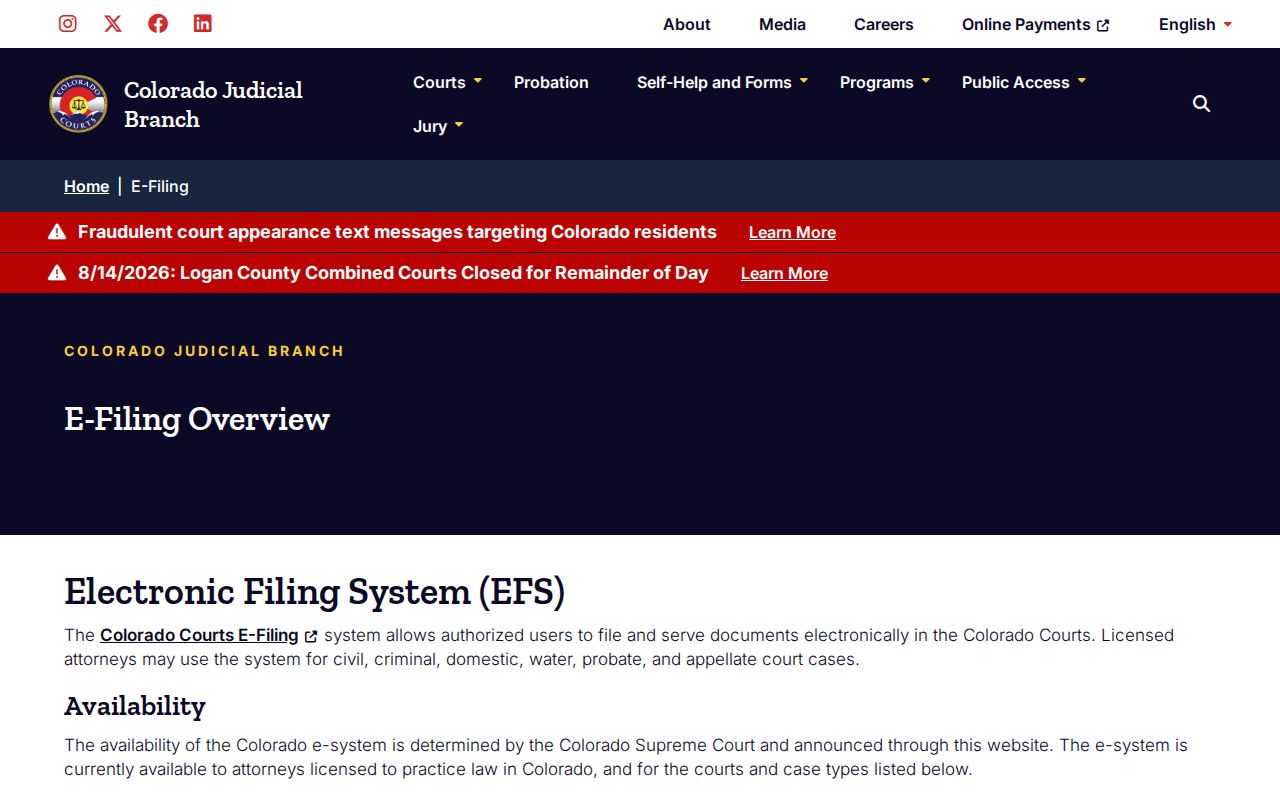
One point deserves repeating. Electronic filing access in Washington County is one thing; asking the clerk for a copy of a court record is another, and the two should not be confused.
Older Washington County Court Records
Historical Washington County court records sometimes end up at the Colorado State Archives instead of the courthouse. The State Archives finding aids describe older holdings. Those holdings include docket books, civil journals, indexes, fee books, and case-file series. That is quite different from a modern searchable docket. Start by asking Washington Combined Court whether the file is still local. If the record has transferred, get the archive collection and volume identifiers before you order a reproduction.
A move to the Archives does not mean the Washington County record is gone. It just means custody shifted on a timeline. Give the archive a court level, a party name, a year range, or a known case number. The search gets much tighter. The holder can tell you current custody and reproduction costs.
Note: Archive requests go smoothly when the local clerk supplies a collection, volume, box, or transfer reference.
Washington County Transcript Requests
A transcript comes from the reporter or recording that captured the proceeding. It is not the hearing docket and not the register of actions. Call the Combined Court with your case number. Include the event date, the hearing type, and the judge or division if you know it. Ask which reporter or recording custodian covered that event. That office can say whether a transcript can be produced. It can also give you a cost estimate.
An appeal adds another layer. The appellate record process carries its own rules. The Judicial Branch publishes appellate record policies and fees that spell out what applies there.
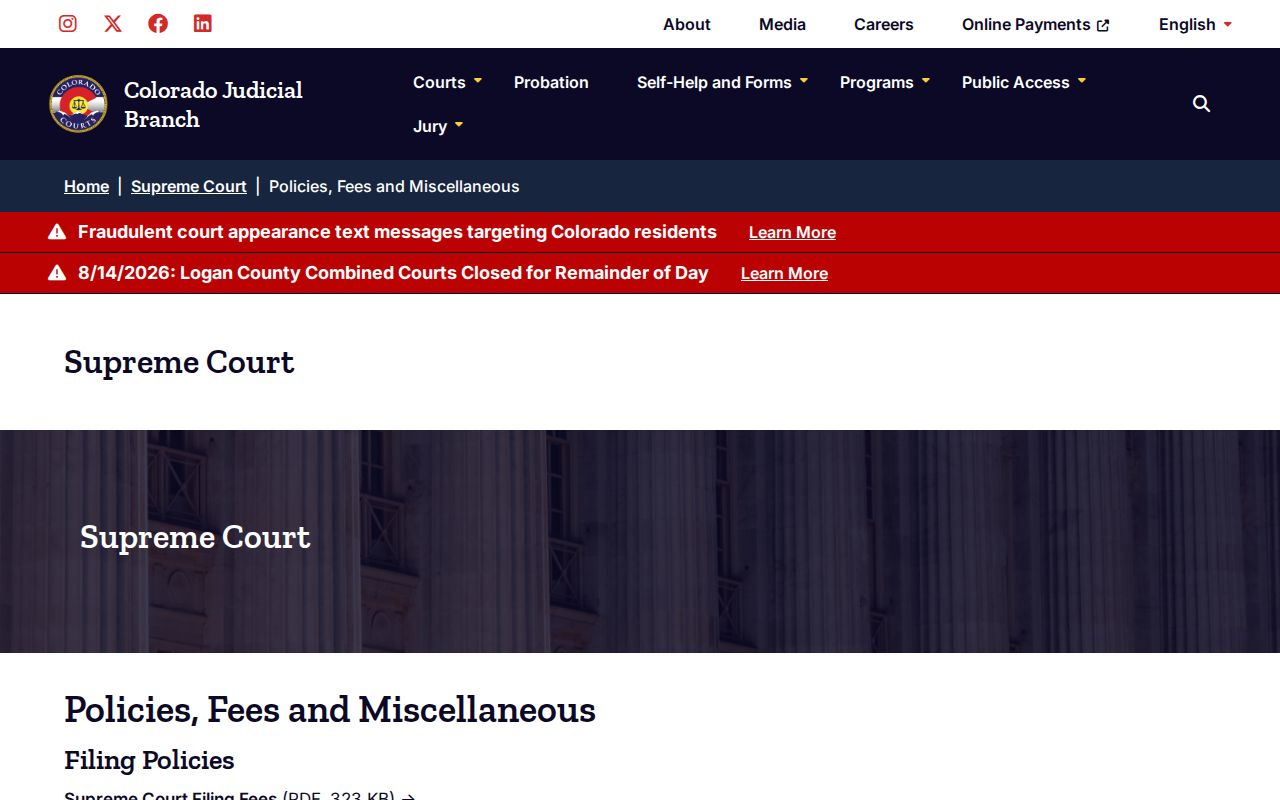
The appellate source matters only when your Washington County material has already entered that separate record process.
Sealed Records and Public Access
Court rules come first for Washington County case files, not the Colorado Open Records Act. CJD 05-01 sorts court records into access levels. It draws a sharp line between what you can view remotely and what you must view at the courthouse. Some files face extra limits. Juvenile, adoption, mental-health, dependency, protected-address, protection-order, and sealed material may all be restricted or redacted. So a docket entry that looks public may still hide part of the case file.
Colorado court record rules:
CJD 05-01 governs access to state court case records, including remote and restricted access.
CJD 06-01 governs fees and costs for retrieval, research, redaction, copies, and scanning.
Colorado statutes include juvenile-access and sealing provisions that work with the court directives.
Before you request anything, ask the clerk what identification, authorization, motion, or order applies. A public case record does not guarantee a download from home. And if a docket search turns up nothing, that alone does not prove no court file exists.
Washington County Case Records Versus PAIRR
PAIRR stands for Public Access to Information and Records Rule 2. It governs Judicial Branch administrative records only. Court records are expressly excluded, so the rule never reaches case files. For administrative business, the rule leans on the Colorado Open Records Act. Under its current terms, the first hour of retrieval and redaction work is free. Hard copies may cost up to $0.25 per page. None of that sets an automatic price for a Washington County case copy.
Route each request to the right desk. Judgments and pleadings go to the Clerk of Court. A budget, policy, or correspondence request goes to the proper Judicial Branch administrative custodian. Keeping the two routes apart prevents delay and preserves the correct fee rule.
Note: Do not quote PAIRR's administrative copy terms as the price for a Washington County court case copy.
Federal Records Beyond Washington County Court
Federal records tied to Washington County live outside the state clerk's file. The District of Colorado uses PACER for viewing documents and CM/ECF for filings. Bankruptcy matters go through the U.S. Bankruptcy Court for the District of Colorado. PACER charges fees, though. The RECAP archive offers free documents that PACER users have contributed. Its coverage is spotty. RECAP hosts the federal documents in a repository kept separate from the state courts.
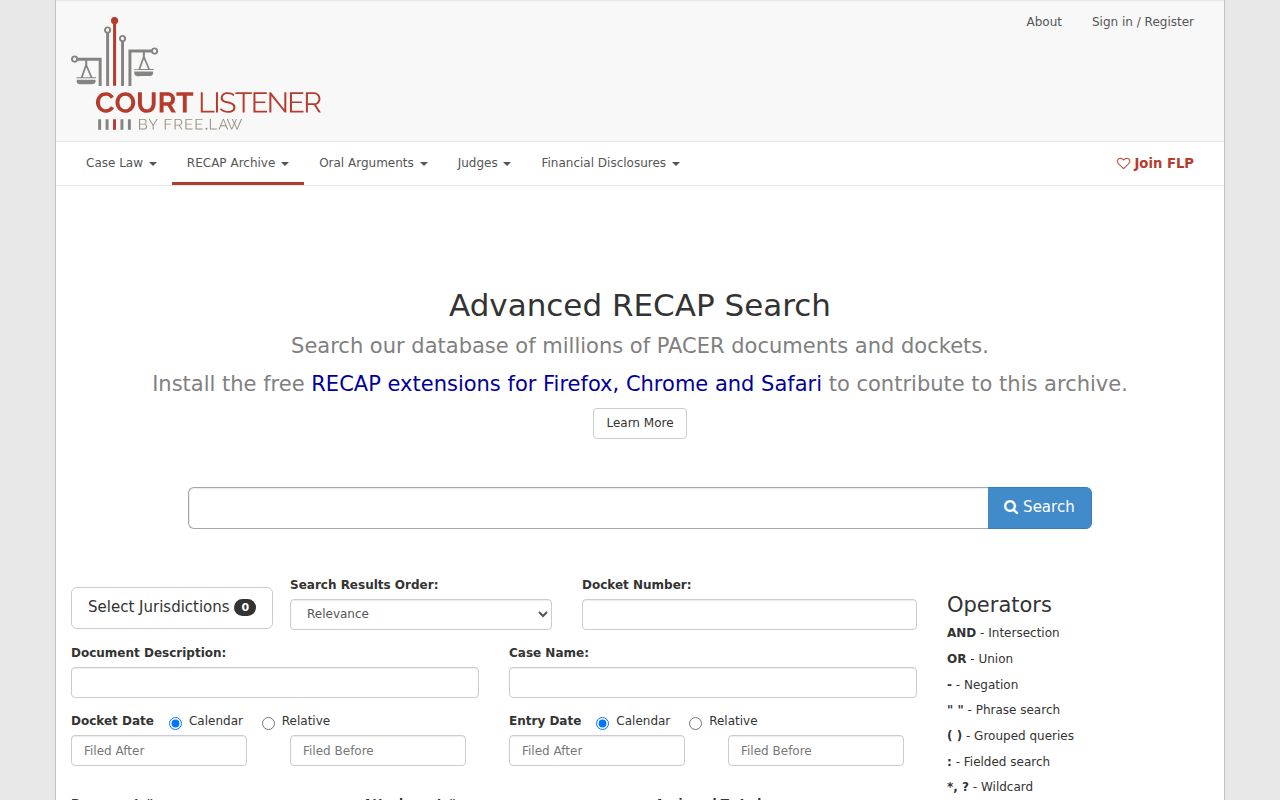
Can't find a RECAP document? Take the search to PACER or contact the federal court directly. Washington Combined Court is a county office, so it cannot fill federal record requests.